Who is Dr. Sanjeet Kumar Rai?
Dr. Sanjeet Kumar Rai is a surgeon whose clinical expertise includes minimally invasive surgery, robotic surgery, gastrointestinal surgery, hernia repair, hepatopancreatobiliary surgery, and kidney transplantation. His approach combines surgical assessment with treatment planning based on each patient’s condition.
What are Dr. Sanjeet Kumar Rai’s qualifications?
Dr. Rai holds MBBS, MS in General Surgery, and M.Ch. in Minimal Access Surgery qualifications. His credentials also include FACS, FCLS, and membership of the Royal College of Physicians and Surgeons of Glasgow.
Which conditions does Dr. Sanjeet Kumar Rai treat?
His areas of practice include hernias, gallbladder and bile duct disorders, pancreatic conditions, colorectal diseases, and conditions requiring kidney transplant surgery. The appropriate treatment depends on the diagnosis, investigation results, and overall health of the patient.
How can I book an appointment with Dr. Sanjeet Kumar Rai?
To enquire about an appointment, call 099586 13771. Confirm the consultation location, available slots, fees, and any reports you should bring before visiting.
Where can I consult Dr. Sanjeet Kumar Rai in Delhi?
For the current consultation address in Delhi, call 099586 13771. Confirm the hospital or clinic location when booking so that you arrive at the correct place.
What are Dr. Sanjeet Kumar Rai’s consultation timings?
Please call 099586 13771 for current consultation timings and appointment availability. Confirm your appointment before travelling, as clinic schedules may change because of surgical commitments.
What is the consultation fee for Dr. Sanjeet Kumar Rai?
Call 099586 13771 to confirm the current consultation fee. You can also ask whether follow-up appointments have a separate charge and whether any investigations are billed independently.
What should I bring to my surgical consultation?
Bring previous prescriptions, blood test results, ultrasound or scan reports, discharge summaries, and details of any earlier operations. Include a list of your medicines, allergies, and existing health conditions.
Can I request a second opinion about gastrointestinal or hernia surgery?
You can contact the appointment team to request a second-opinion consultation. Bring your diagnosis, scan images, reports, and proposed treatment plan so that the reasons for surgery and possible alternatives can be reviewed.
Does consulting a surgeon mean I will need an operation?
No. A surgical consultation helps establish the diagnosis and assess your treatment options. Depending on the condition, treatment may involve observation, medicines, further investigations, or surgery.
What is minimally invasive surgery?
Minimally invasive surgery uses small incisions and specialised instruments to perform an operation. Laparoscopic surgery uses a camera to view the inside of the abdomen or pelvis, allowing suitable procedures to be completed without a large incision.
What is the difference between laparoscopic and robotic surgery?
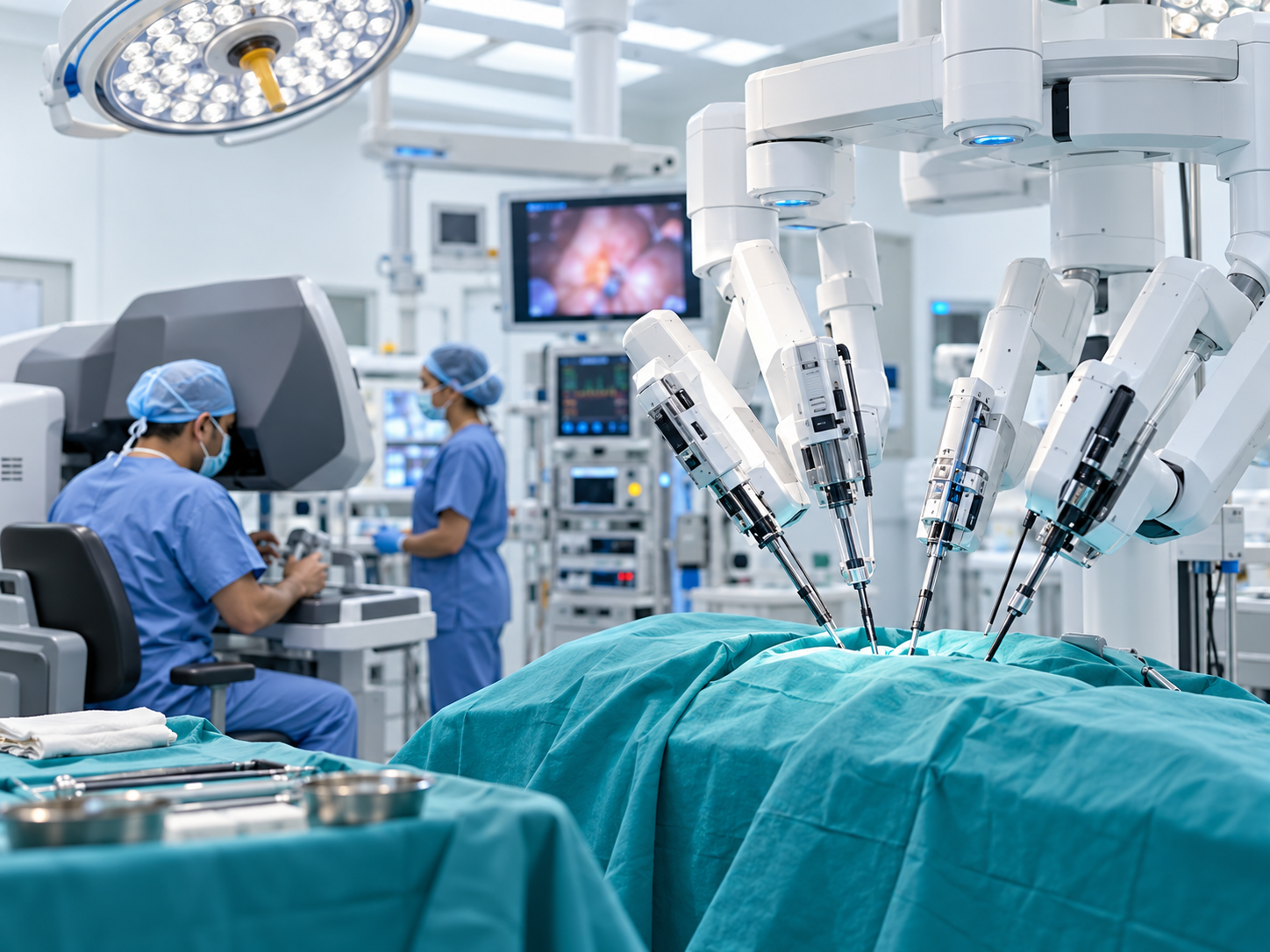
In laparoscopic surgery, the surgeon directly handles instruments through small incisions. In robotic surgery, the surgeon controls instruments through a robotic system. The choice depends on the procedure, anatomy, clinical needs, and available facilities.
Does a robot perform robotic surgery independently?
No. The surgeon controls the robotic instruments throughout the operation. The system assists the surgeon’s movements; it does not independently diagnose the condition or decide how to perform the procedure.
Is robotic surgery suitable for every patient?
No. Suitability depends on the diagnosis, complexity of surgery, previous operations, general health, and other factors. Dr. Rai can discuss whether a robotic, laparoscopic, or open approach is appropriate during the surgical assessment.
What are the potential benefits of laparoscopic surgery?
For suitable procedures, laparoscopic surgery may offer smaller wounds, less postoperative discomfort, and a quicker recovery than open surgery. The benefits vary with the operation and the patient’s health; they are not guaranteed for every case.
Can laparoscopic surgery be changed to open surgery?
Yes. A surgeon may need to change to an open approach if it is safer to complete the procedure that way. This possibility should be discussed before the operation as part of informed consent.
Does Dr. Sanjeet Kumar Rai perform hernia surgery?
Hernia surgery is one of Dr. Rai’s listed areas of expertise. His profile includes laparoscopic and robotic approaches for inguinal, ventral, incisional, hiatal, and recurrent hernias, with treatment selected after individual assessment.
What symptoms can suggest an inguinal hernia?
An inguinal hernia may cause a groin swelling, heaviness, or discomfort that becomes more noticeable when standing, coughing, or straining. Some hernias cause little pain. A clinical examination can help identify the cause of a groin lump.
Does every inguinal hernia need immediate surgery?
Not always. Selected patients with minimal symptoms may be offered monitoring after assessment. Painful, enlarging, or complicated hernias may need surgery. The decision depends on the hernia’s features and the patient’s individual risks.
What are TAPP and TEP hernia repairs?
TAPP and TEP are minimally invasive approaches to inguinal hernia repair. Both place mesh in a space behind the abdominal wall, but they reach that space differently. Your surgeon can explain which approach suits your hernia and why.
Can Dr. Rai assess a recurrent hernia after previous surgery?
Yes. Complex and recurrent hernias are included in his listed surgical expertise. Assessment involves reviewing the earlier operation, current symptoms, and any necessary imaging before discussing repair options.
What is an incisional hernia?
An incisional hernia develops through a weakened area at the site of a previous abdominal operation. It may appear as a bulge near the surgical scar. Treatment planning considers its size, symptoms, previous repairs, and the strength of the surrounding abdominal wall.
Is mesh always necessary for hernia repair?
Mesh is commonly used to reinforce hernia repairs, but it is not required in every situation. The recommendation depends on the hernia type, size, infection risk, and other clinical factors. Ask about the benefits, risks, and alternatives for your repair.
When does a hernia require emergency medical attention?
Seek emergency care for sudden severe pain, a firm or tender swelling that no longer goes back in, vomiting, abdominal swelling, or difficulty passing stool or gas. These symptoms may indicate a trapped hernia or bowel obstruction.
What does a gastrointestinal surgeon treat?
A gastrointestinal (GI) surgeon assesses conditions affecting the digestive tract that may need surgical treatment, including the stomach, intestines, colon, and rectum. Dr. Rai’s wider practice also includes hepatopancreatobiliary surgery.
When should I seek a gastrointestinal surgery consultation?
A consultation may be appropriate if you have a diagnosed digestive condition that could require surgery or have been referred by another doctor. Persistent abdominal symptoms, unexplained weight loss, or bleeding also need medical assessment to establish the cause.
What happens during a GI surgery consultation with Dr. Rai?
The consultation generally includes a discussion of symptoms, medical history, medicines, and previous treatment, followed by an examination and review of reports. Further tests may be advised before discussing treatment options and whether surgery is needed.
Does Dr. Sanjeet Kumar Rai perform colorectal surgery?
Colorectal surgery is included in Dr. Rai’s clinical profile. His listed expertise includes laparoscopic colorectal resections, selected sphincter-preserving procedures, and complex pelvic surgery. Suitability depends on the diagnosis and detailed assessment.
Can colorectal surgery be performed laparoscopically?
Selected colorectal operations can be performed laparoscopically. The choice depends on the condition, its extent, previous surgery, and the patient’s health. An open approach may be more appropriate in some cases.
Will every patient undergoing colorectal surgery need a stoma?
No. Some patients need a temporary or permanent stoma, while others do not. The likelihood depends on the location and extent of the disease, the operation, and healing risks. Your surgeon should discuss this possibility before surgery.
What is enhanced recovery after surgery, or ERAS?
ERAS is a coordinated approach to recovery involving measures such as patient education, appropriate pain relief, nutrition, and early movement when safe. The recovery plan is adjusted to the operation and the patient’s needs.
Does Dr. Rai provide gallbladder surgery consultations?
Gallbladder surgery, including laparoscopic cholecystectomy, is part of Dr. Rai’s listed expertise. A consultation can help determine whether gallstones or another gallbladder condition require surgery.
Do all gallstones require surgery?
No. Gallstones that cause no symptoms often do not need treatment. Gallstones causing pain or complications may require gallbladder removal. The recommendation depends on symptoms, investigation results, and individual health risks.
What is laparoscopic cholecystectomy?
Laparoscopic cholecystectomy is an operation to remove the gallbladder through small abdominal incisions using a camera and specialised instruments. It is a commonly used treatment for symptomatic gallstones when surgery is appropriate.
What does hepatopancreatobiliary surgery mean?
Hepatopancreatobiliary (HPB) surgery deals with conditions affecting the liver, pancreas, gallbladder, and bile ducts. Dr. Rai’s listed expertise includes HPB procedures and biliary reconstruction.
When should I consult a pancreatic surgeon?
A pancreatic surgery consultation may be advised after a scan identifies a pancreatic growth, cyst, or another condition that could require an operation. Bring all imaging and reports so that the diagnosis and available treatment options can be reviewed.
Does every pancreatic condition require an operation?
No. Pancreatic conditions have different causes and treatment needs. Some require monitoring or nonsurgical treatment, while others may need surgery. A specialist assessment is necessary before deciding on the appropriate approach.
Can Dr. Rai assess complex bile duct problems or previous biliary surgery?
His profile includes biliary reconstruction and complex biliary reoperations. Bring previous operation notes, discharge summaries, and scan reports to help with assessment and treatment planning.
Does Dr. Sanjeet Kumar Rai have expertise in kidney transplant surgery?
Kidney transplantation and live donor nephrectomy are included in Dr. Rai’s clinical profile. Contact 099586 13771 to enquire about consultation arrangements and the appropriate transplant centre.
What is a live donor nephrectomy?
A live donor nephrectomy is an operation to remove one kidney from a medically suitable living donor for transplantation. Donor assessment is a separate, detailed process intended to protect the donor’s health and establish suitability.
Can kidney donor surgery be performed laparoscopically?
Laparoscopic and hand-assisted live donor nephrectomy are included in Dr. Rai’s listed expertise. The transplant team decides the appropriate approach after reviewing the donor’s anatomy, medical history, and investigation results.
Who may be considered for kidney transplantation?
Kidney transplantation may be considered for suitable patients with advanced kidney failure. Assessment by a transplant team considers overall health, potential benefits and risks, donor options, and the ability to manage ongoing treatment.
Is long-term follow-up necessary after kidney transplantation?
Yes. Recipients need regular follow-up to monitor kidney function, medicines, and possible complications. Anti-rejection treatment and ongoing care remain essential even when a patient feels well.
What is an AV fistula for dialysis?
An arteriovenous (AV) fistula is a surgically created connection between an artery and a vein, usually in the arm. It provides access to the bloodstream for haemodialysis. The most suitable access option depends on the patient’s vessels and dialysis plan.
Can an AV fistula be used immediately after surgery?
Usually not. A new fistula needs time to develop before it can support dialysis, and some need further assessment or treatment. The dialysis team checks when it is ready. To enquire about an AV fistula consultation, call 099586 13771.
How should I prepare for laparoscopic or robotic surgery?
Follow the surgical team’s instructions about fasting, medicines, investigations, and hospital admission. Tell them about all medicines and supplements you take. Do not stop blood thinners or change diabetes treatment without specific medical advice.
How long does recovery take after gastrointestinal or hernia surgery?
Recovery varies with the operation, surgical approach, overall health, and any complications. Ask for guidance specific to your procedure, including when to resume work, driving, exercise, and lifting. Follow your discharge instructions rather than a general timetable.
What symptoms after surgery need urgent medical attention?
Worsening abdominal pain, persistent vomiting, fever, or increasing wound redness or discharge need prompt medical assessment. Chest pain, severe breathlessness, or collapse require emergency care. Do not wait for a routine appointment if serious symptoms develop.
What affects the cost of laparoscopic or robotic surgery in Delhi?
Costs depend on the procedure, hospital, surgical approach, anaesthesia, implants or consumables, length of stay, and additional treatment needs. Request an itemised estimate after assessment and check insurance coverage directly with the hospital and insurer.
How can I contact Dr. Sanjeet Kumar Rai for a surgical consultation?
Call 099586 13771 to enquire about a consultation for hernia, gastrointestinal, colorectal, gallbladder, pancreatic, or transplant-related concerns. Confirm the appointment time, location, fee, and required reports before your visit.