Robotic vs Laparoscopic Surgery: What Is the Difference?
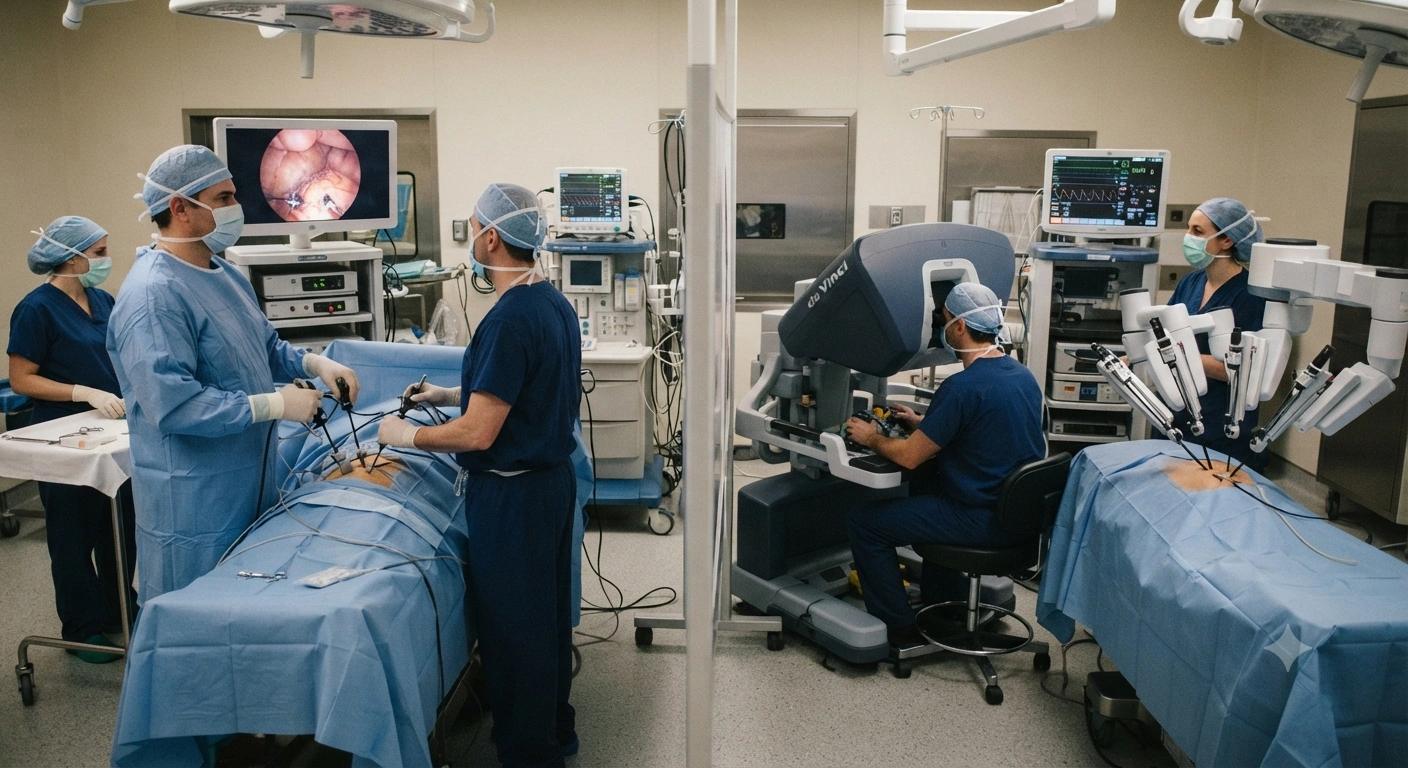
The main difference is how the surgeon controls the instruments. In conventional laparoscopy, the surgeon holds them directly. In robotic surgery, the surgeon operates them through a computer-assisted console. Both use small incisions. The right choice depends on the procedure, your health and the team’s experience; robotic surgery is not automatically better. (FDA)
If you have been advised to undergo gallbladder removal, hernia repair or another abdominal operation, you may have been offered more than one approach. Understanding the terms helps you ask useful questions about safety, recovery and cost.
What Is Laparoscopic Surgery?
Laparoscopic (keyhole) surgery lets a surgeon operate inside the abdomen or pelvis through small cuts. A camera called a laparoscope sends images to a screen, while instruments enter through small tubes called ports. Gas is usually introduced to create working space, and the surgeon moves the instruments directly while watching the screen, with the patient under general anaesthesia.
It is used for gallbladder removal, hernia repair and selected bowel operations. Compared with open surgery, it can mean smaller wounds and a shorter recovery for suitable patients. (NHS)
What Is Robotic Surgery?
Robotic (robot-assisted) surgery uses a computer-assisted system that translates the surgeon’s hand movements into movements of the instruments. The surgeon sits at a console while a trained team assists beside the patient. The system commonly gives a magnified 3D view and instruments that help with delicate movements.
The robot does not operate by itself. The surgeon controls every movement and remains responsible for the operation. (Mayo Clinic)
Robotic vs Laparoscopic: Comparison
| Feature | Laparoscopic | Robot-assisted |
|---|---|---|
| Instrument control | Surgeon holds instruments directly | Surgeon controls via a console |
| Surgical view | Monitor image; 2D and 3D exist | Commonly magnified 3D |
| Instrument movement | Depends on instruments used | Articulated tips help in tight spaces |
| Incisions | Small; size and number vary | Small; size and number vary |
| Operating time | Depends on procedure and team | Can be longer for some procedures |
| Recovery | Depends on operation and patient | Not consistently faster |
| Cost | Depends on procedure and hospital | Can be higher; ask for an estimate |
These are general differences, not predictions for an individual patient.
Does Robotic Surgery Give Better Outcomes?
A technical advantage does not automatically mean a better result. The 2020 RIVAL randomised trial compared robotic and laparoscopic inguinal hernia repair in 102 patients. At 30 days there were no significant differences in pain, quality of life, mobility or wound outcomes, while robotic procedures took longer and cost more. (JAMA Surgery)
Findings from one operation do not settle the question for every hernia or procedure. For ventral hernias, a SAGES review noted possible benefits in some comparisons but stressed limits in study quality.
Ask your surgeon: “What benefit is expected from this approach for my particular operation?”
How It Differs by Operation
Gallbladder Removal (Cholecystectomy)
Laparoscopic cholecystectomy is widely used and a robotic system can also perform it. The aim is identical. Inflammation, previous surgery and difficult anatomy can affect the plan, so ask why one approach is recommended for you.
Hernia Repair
Hernias differ in site and complexity: inguinal (groin), ventral (abdominal wall) and incisional (at an old scar). Mesh is often used. Results from a simple groin hernia should not be applied to complex abdominal wall reconstruction. (ACS)
Colorectal & Complex Abdominal Surgery
Both techniques are used in selected colon and rectal operations. Robotic assistance can help in confined spaces, but for cancer the tumour, planned resection and cancer outcomes matter more than the technology itself.
Pain, Recovery and Hospital Stay
The name of the technology does not give a reliable recovery timetable. After keyhole surgery you may have wound soreness, bloating, tiredness and temporary shoulder discomfort. (NHS) Ask for separate guidance on:
- Leaving hospital
- Returning to desk work
- Driving
- Physical work, exercise and heavy lifting
Support matters too. Enhanced Recovery After Surgery (ERAS) combines preparation, pain management, nutrition and early movement, adapted to you. (NHS)
Risks and Conversion to Open Surgery
Both approaches carry surgical and anaesthetic risks such as bleeding, infection, medicine reactions and breathing problems. Some risks are procedure-specific: hernia repair may lead to persistent pain or recurrence, and gallbladder surgery can involve a bile leak or bile duct injury.
A laparoscopic or robotic operation may be converted to open surgery if safe progress isn’t possible, for example with poor visibility or bleeding. Conversion is a deliberate safety decision. (SAGES)
Robotic vs Laparoscopic Surgery Cost in India
No single price fits every operation, and a study’s figures are not a quotation for a Delhi hospital. Request written estimates for the same proposed operation and check whether each includes:
- Surgeon and anaesthetist fees
- Operation theatre and equipment charges
- Mesh, staplers or other consumables
- Tests, medicines and room charges
- Follow-up visits and extra charges if the plan changes
Also ask your insurer to confirm coverage and limits for the procedure.
Questions to Ask Your Surgeon
- Why do I need this operation, and are there alternatives?
- Why do you recommend this approach in my case?
- What experience do you have with this specific procedure?
- What are the key short- and long-term risks?
- Could the operation need to change to open surgery?
- What recovery should I expect for work and daily life?
- What is included in the estimated cost?
Bring your reports and say what matters most to you: pain control, time off work or support at home.
Preparing for Surgery
Share your medical history, allergies and a full list of medicines and supplements. Follow instructions on eating, drinking and medication, and never stop prescribed medicines on your own. Arrange transport home and tell the hospital about any new illness before surgery. (NHS)
Discuss Your Options With Dr. Sanjeet Kumar Rai
Dr. Sanjeet Kumar Rai’s clinical areas include advanced laparoscopic and robotic gastrointestinal surgery, colorectal surgery, complex hernia repair and hepatopancreatobiliary surgery.
His qualifications include MBBS from AIIMS New Delhi, MS from PGIMER Chandigarh and MCh in Minimal Access Surgery from AIIMS New Delhi. (Sant Nirankari Health City)
Frequently Asked Questions
Is robotic surgery a type of laparoscopic surgery?
For many abdominal operations, yes. Robot-assisted laparoscopy uses small incisions and a camera, with the surgeon controlling instruments through a robotic system.
Does the robot perform surgery by itself?
No. The surgeon controls the instruments and makes all surgical decisions.
Is robotic surgery always safer?
No. No single approach is safest for every patient. Suitability, training and evidence for your procedure matter.
Does robotic surgery always mean less pain?
No. In the RIVAL trial of inguinal hernia repair, pain did not differ significantly between the two groups.
Will I recover faster after robotic surgery?
Not necessarily. Both use small incisions, but the extent of the operation and aftercare matter. Ask for a timetable specific to your procedure.
Will robotic surgery leave no scars?
No. Small incisions are still incisions and can scar. Their number, position and appearance depend on the operation and healing.
How long should I avoid heavy lifting?
There is no universal rule. Follow the advice for your repair or procedure and ask when you can return to lifting or strenuous activity.
Which approach should I choose?
Ask your surgeon to explain the expected benefit, risks, recovery and cost for your diagnosis. A good decision links the technique to a clear clinical reason and your circumstances.
Considering Abdominal Surgery?
Book a consultation to discuss your diagnosis, surgical options and expected recovery.